


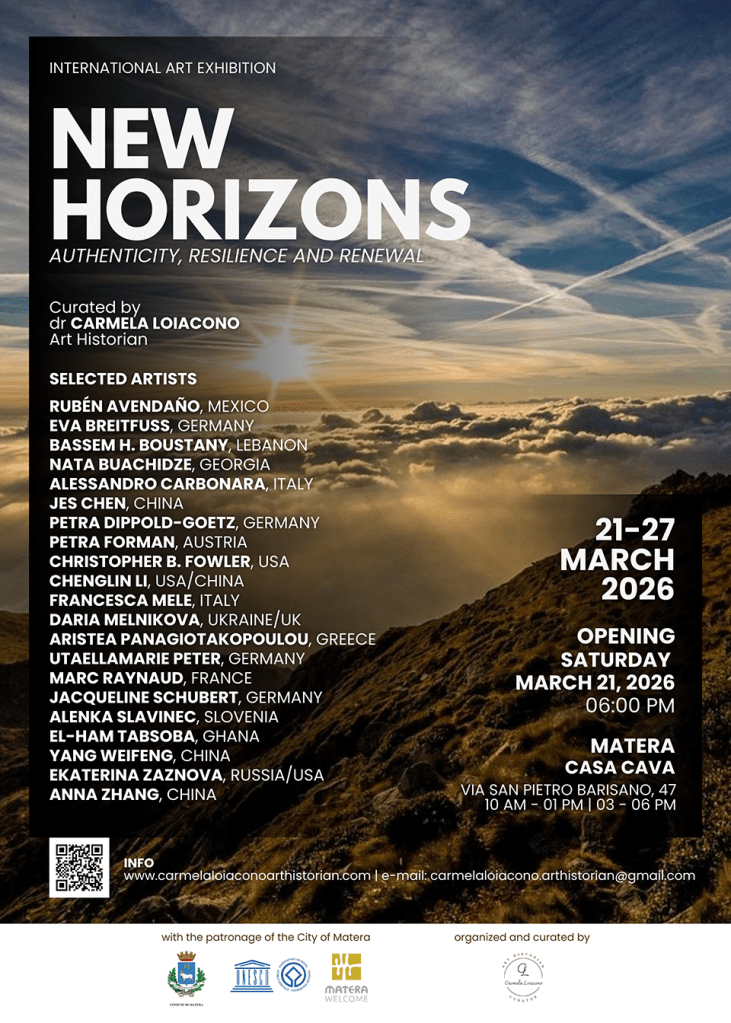
I was honored to be invited by Dr. Carmela Loiacono to participate in the exhibition “NEW HORIZONS – Authenticity, Resilience and Renewal “, held at Casa Cava in Matera, Italy, from March 21 to 27, 2026.
Curated by Carmela, the exhibition brought together international artists around a shared reflection on transformation, identity, and the idea of crossing thresholds between fragility and renewal.
What I particularly appreciated in Carmela’s approach is her ability to build a coherent dialogue between works. Her reading of each artist’s practice is both attentive and precise, allowing individual expressions to resonate within a broader narrative without losing their uniqueness. It is a rare quality to find a curator who listens as much as she interprets.
It was a meaningful experience to present my work in such a context, surrounded by artists from different parts of the world, each bringing their own language and sensibility. What stayed with me most was the quiet exchange between the works themselves, beyond geography, beyond words.
Matera itself was something else.
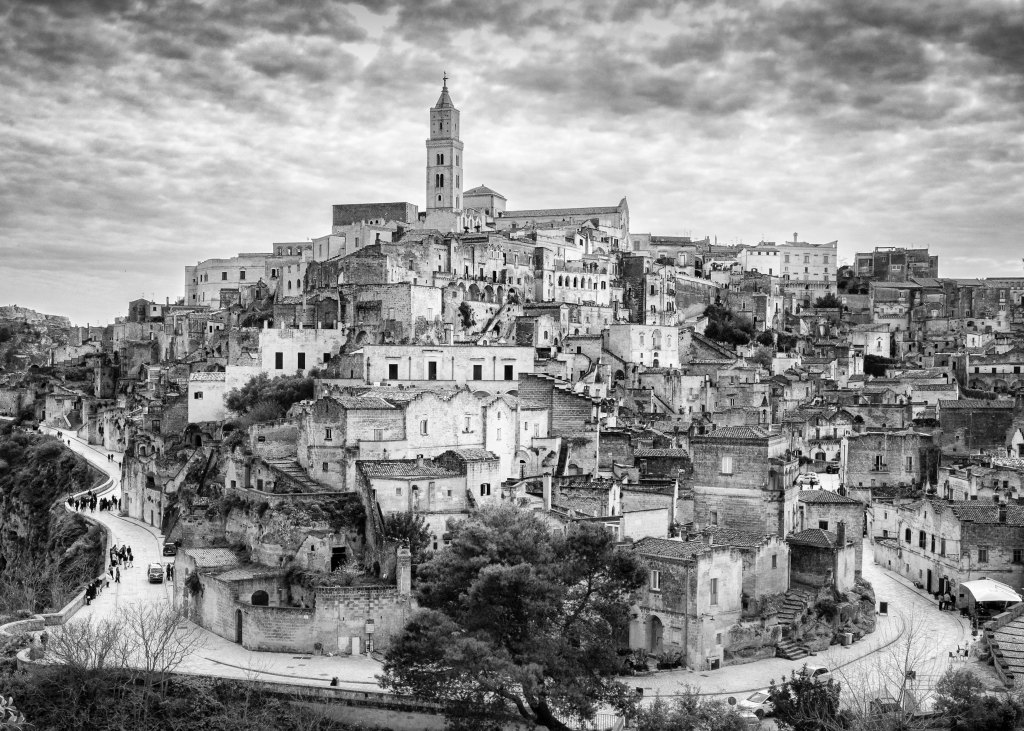
I spent three days living within its ancient fabric, in a modest house embedded in the continuity of the city. Matera is not a place you simply visit, it is a place you inhabit, almost physically, almost emotionally. The houses, carved into stone, seem to emerge from the earth rather than stand upon it. They are not constructions in the conventional sense, but layers of time, shaped slowly by human presence and necessity.
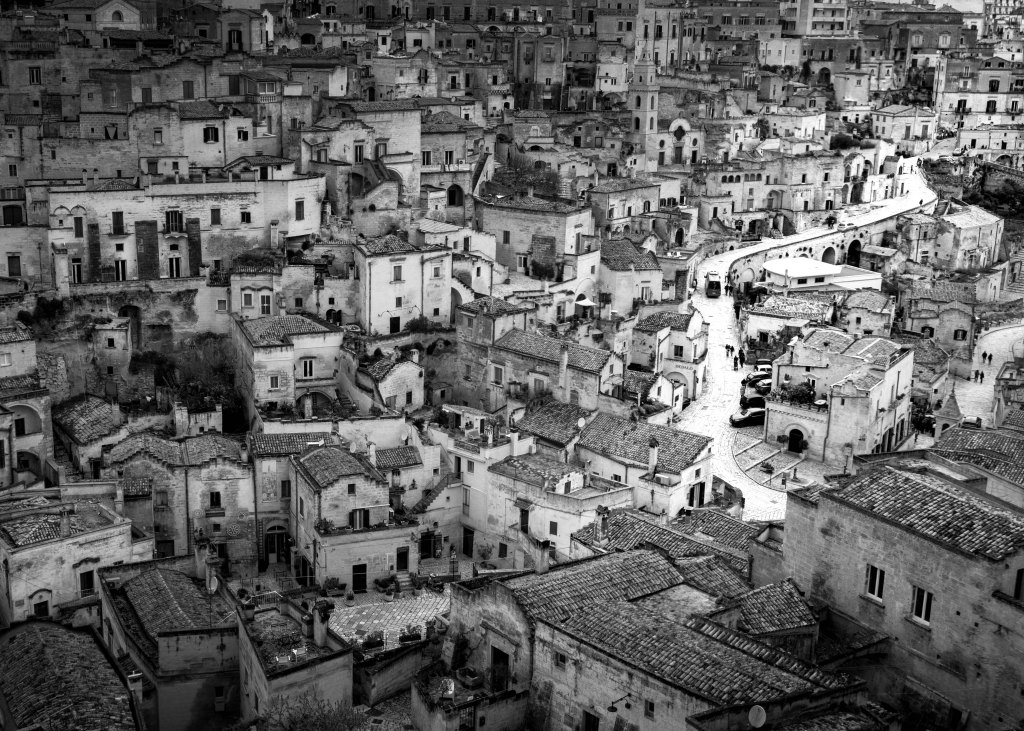
There is a certain humility in this architecture. Nothing is excessive, nothing is imposed. Light enters gently, surfaces remain raw, and space follows the logic of terrain rather than design intention. You feel that the city was not planned, but revealed.
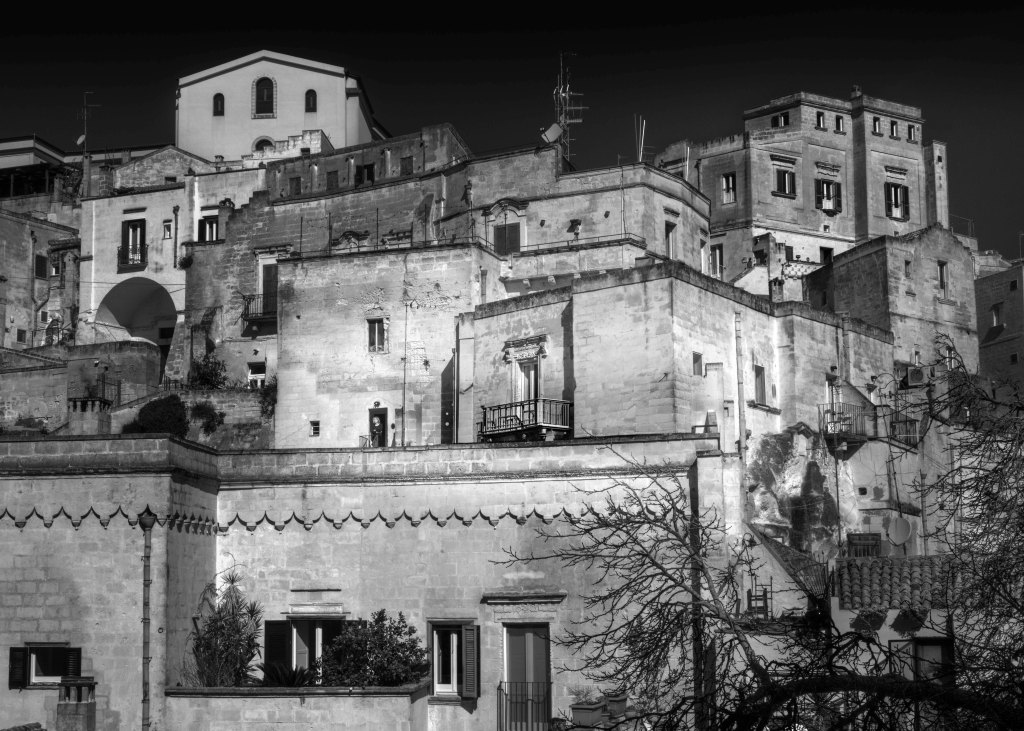
Walking through Matera is like moving inside a memory that is not entirely yours. Stone carries time differently there. It does not age, it absorbs. It holds traces of life, of silence, of continuity. Past and present do not oppose each other; they coexist.
The images I captured during my stay are not meant to document the city, but to respond to it.
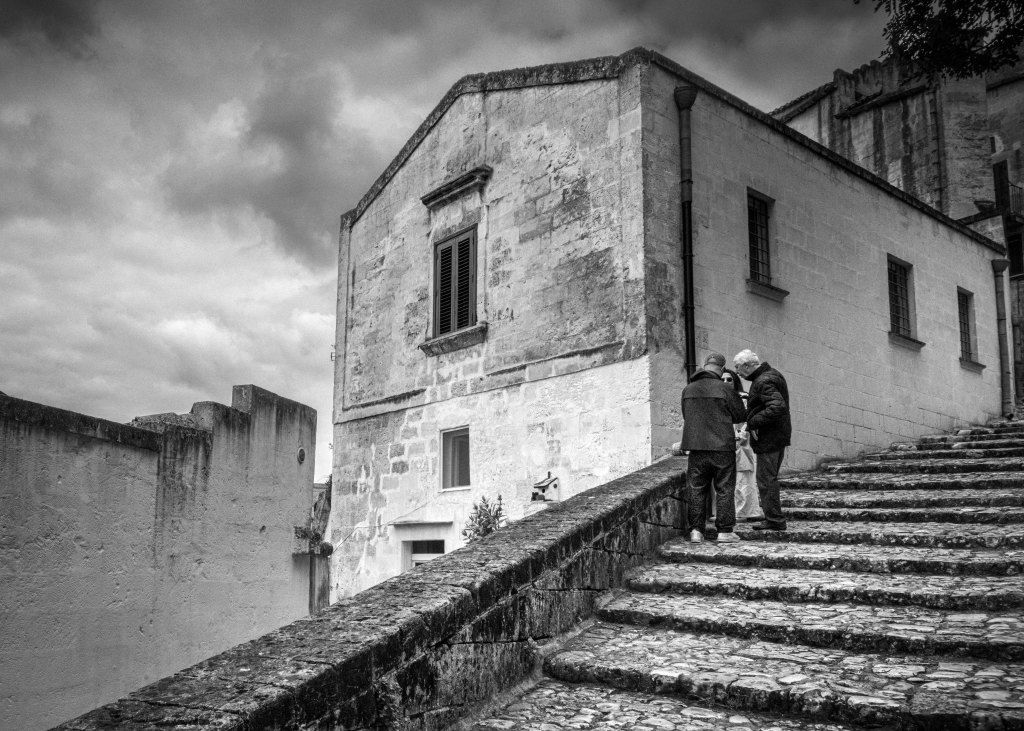
In the wide panoramic views, the urban mass appears almost geological, as if shaped by erosion rather than construction. The distinction between landscape and architecture dissolves. The city becomes terrain.
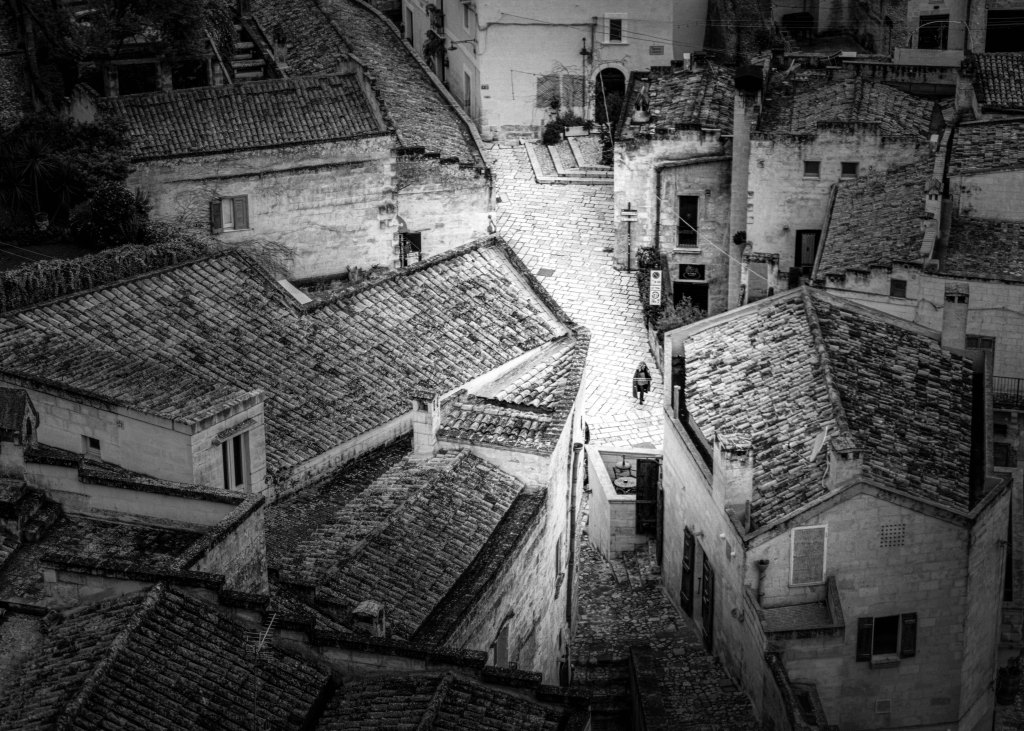
In the closer frames, fragments of walls, openings, and terraces reveal a more intimate presence. Light touches the surfaces with restraint, emphasizing textures that speak of endurance rather than decay. Shadows remain soft, almost patient.
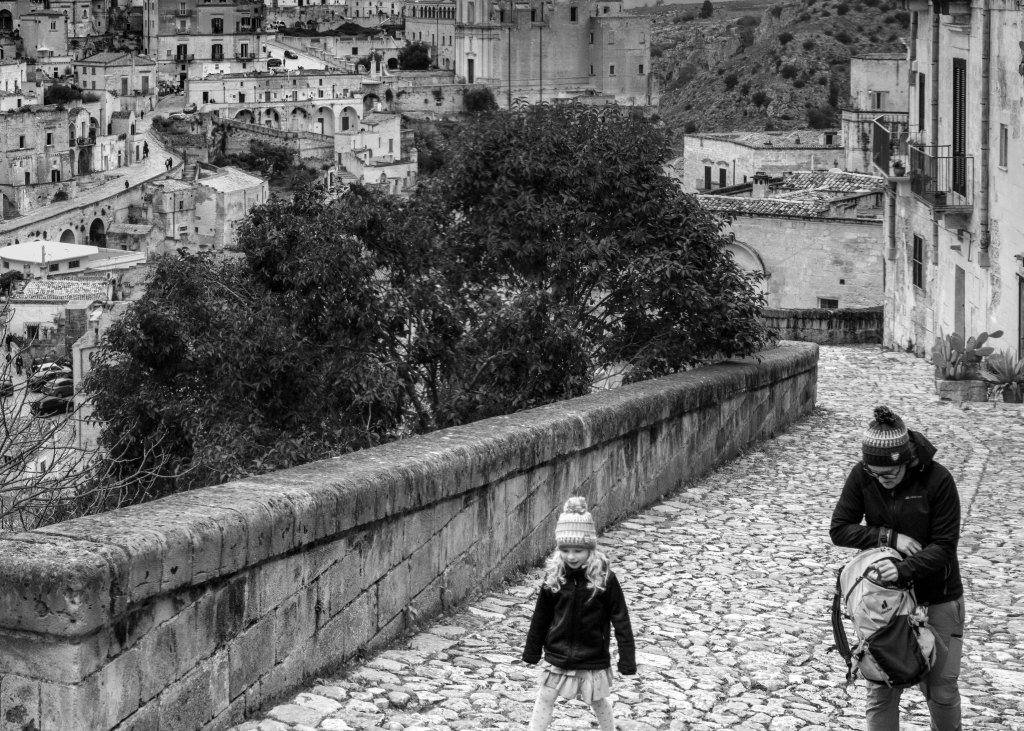
At times, human figures appear small within the scale of the city. They do not dominate the space, they belong to it. Their presence reinforces the idea that Matera is not monumental in intention, but human in essence.
What moved me most was this quiet tension between permanence and fragility.
Matera feels eternal, yet it is built from gestures that are simple, vulnerable, and deeply human.
 BASSEM H. BOUSTANY
Leave a Reply