


When I released my recent photography project last year, one of my first wishes was to see it presented in Lebanon.
Not as a commercial step, but as something personal. Lebanon is where my visual sensitivity was formed, where architecture, streets, and light first shaped the way I learned to observe cities. For many years, one of the country’s largest and most established bookstores was my personal reservoir of books. I used to spend hours there, moving slowly between shelves, searching for photography books and magazines, discovering new artists, and looking for inspiration. It was a place where ideas quietly formed, where images opened new directions, and where my understanding of photography gradually evolved.
For that reason, it felt natural to try to bring the work back there.
I approached the bookstore with that hope. After a brief emails exchange, the project was declined. The explanation was that the visual style and technique did not align with what they were currently looking for, nor with what the Lebanese public appreciates.
The refusal itself was not surprising. Rejection is part of any creative journey. What stayed with me, however, was the idea that artistic language can sometimes be judged through expectations of familiarity rather than curiosity. Lebanon, in my experience, has always been a place where audiences are visually aware, culturally engaged, and open to experimentation. It inevitably raises a broader question. When cultural spaces act as gatekeepers, are they reflecting public taste, or unintentionally narrowing the space for discovery?
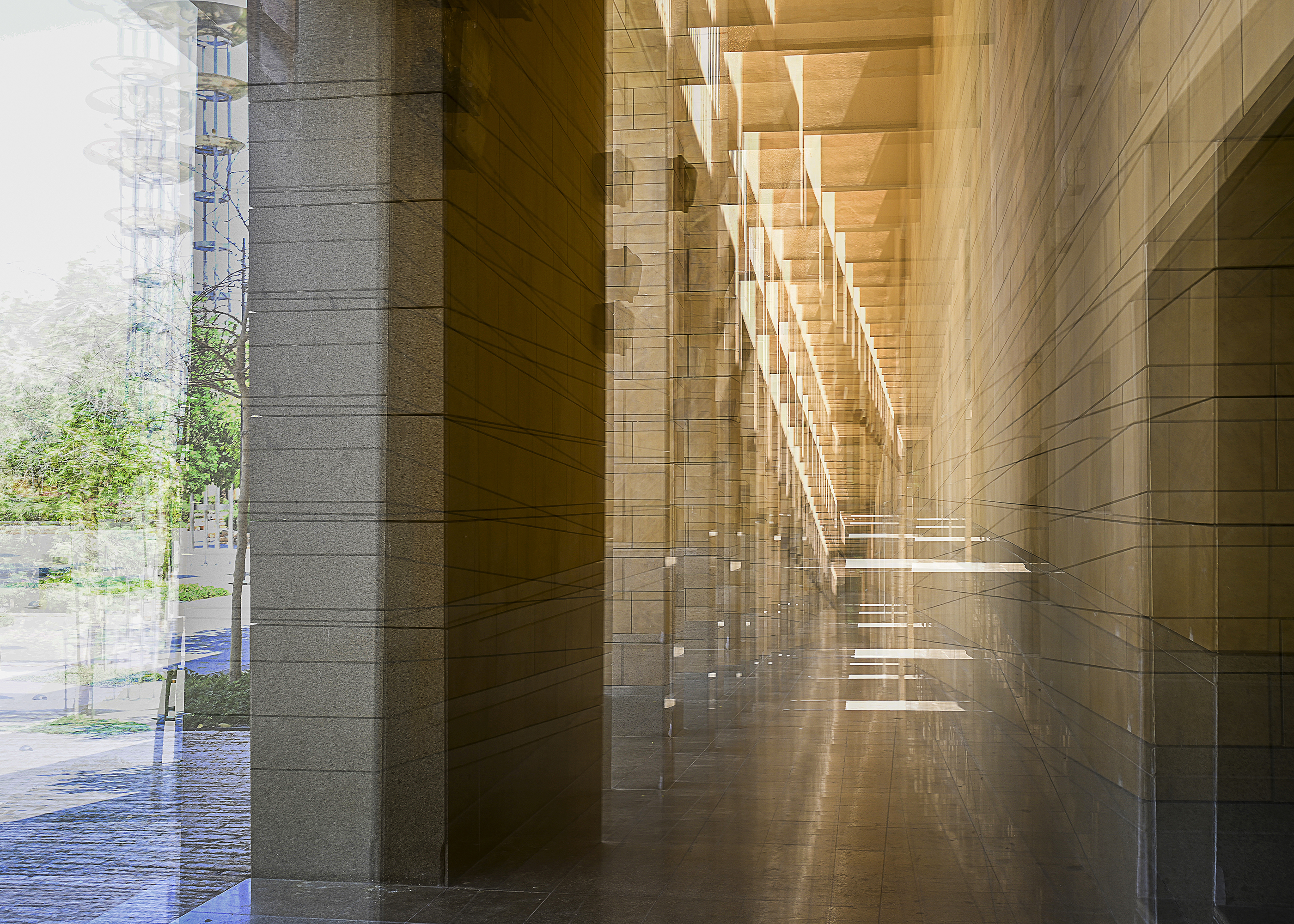
The visual language of the work is intentional. The slight blur comes from a photographic approach known as Intentional Camera Movement, often combined with multiple exposures. Rather than seeking conventional sharpness, this technique allows images to express movement, rhythm, and atmosphere, capturing not only how a city looks but how it feels, its energy, its transitions, and its constant motion. This approach follows a contemporary expressive tradition explored by photographers such as Alexey Titarenko, Freeman Patterson, Olga Karlovac, and Chris Friel, where photography moves beyond documentation into interpretation.
What surprised me most came afterward.
Since its release on May 1st, 2025, 257 copies have been sold through bookstores across the Gulf region. Out of 192 online sales worldwide, 62 were ordered from Lebanon itself, mostly by art-interested individuals, photographers, and media art students, despite the shipping costs they had to carry. Another well-known bookstore welcomed the work immediately, and the first shipment of 24 copies sold out.
The first edition consisted of 500 copies. I am now preparing for the second edition.
Looking back, the experience feels less like rejection and more like a reminder that art often travels in unexpected ways. Sometimes it finds its audience directly. Sometimes it moves outside traditional paths before returning to where it began. And sometimes it simply reveals that curiosity and openness already exist among readers, waiting to be met.
Perhaps culture continues to grow not only through institutions, but through individuals who keep searching, discovering, and remaining open to new ways of seeing, just as I once did while standing for hours between bookstore shelves, looking for inspiration.
 BASSEM H. BOUSTANY Photography
Leave a Reply