


August 15th in Lebanon
marks the Feast of the Assumption of the Virgin Mary, a time when faith, community, and continuity intertwine. It is a day holding a unique duality: steeped in centuries-old ritual yet breathing in the contemporary rhythms of Lebanese life. Even in a country often defined by its turbulence, St. Mary’s Day anchors people in something unshakable, a shared moment of reflection, tradition, and connection.
On the evening of August 14th, as night falls, church bells ring, fireworks scatter light across the sky, and candles burn low in the hands of worshippers. In the stillness between the echoes, it feels as though the distance between earth and heaven has narrowed, if only for a day.
Communities gather for evening Masses, processions, and the slow, communal cooking of “Hrisseh”, a humble, hearty dish of wheat and lamb simmered through the night in massive cauldrons placed at the church square. Pilgrims, neighbors, and visitors alike share warm bowls, exchanging blessings as choirs sing and the air hums with both reverence and celebration. Dishes like “Hrisseh” are not simply food, they are rituals of healing, gratitude, and shared memory.
Lebanon’s Assumption celebrations remain simple, yet deeply resonant: prayers whispered, meals shared, and a quiet, enduring sense that in honoring Mary, we renew our bond to each other and to something far greater than ourselves.
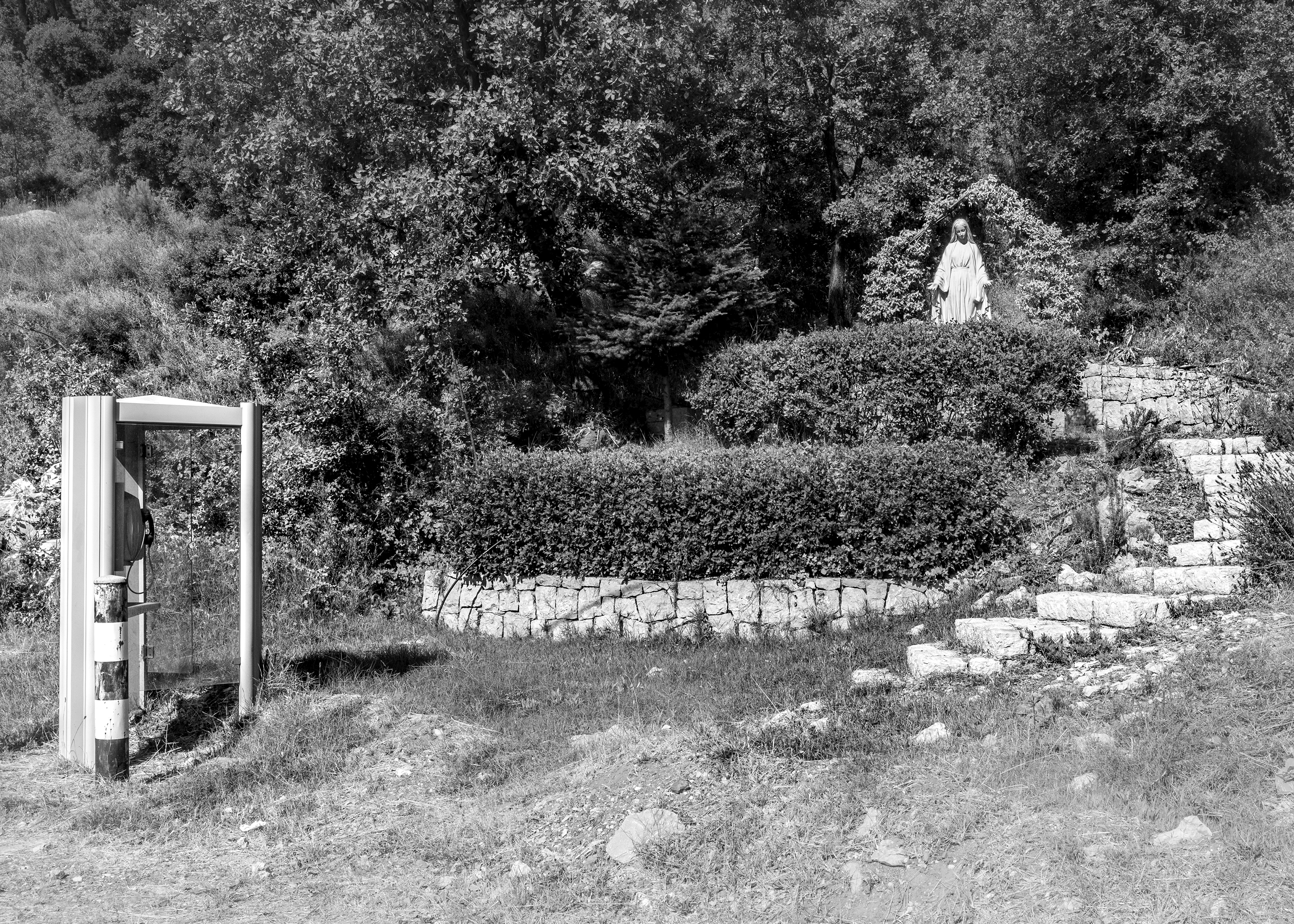
While driving through the curving roads that connect one village to the next, I see the signs of the feast everywhere, clusters of candles on balconies, flowers left at roadside shrines, and processions moving through narrow streets. And then, I pass an old phone booth at the edge of a path, its receiver long gone. I can’t help imagining a call that needs no number. Above, Mary stands in the trees, her gaze steady, her hands open, a reminder that some lines are never disconnected.
 BASSEM H. BOUSTANY Photography
Leave a Reply