


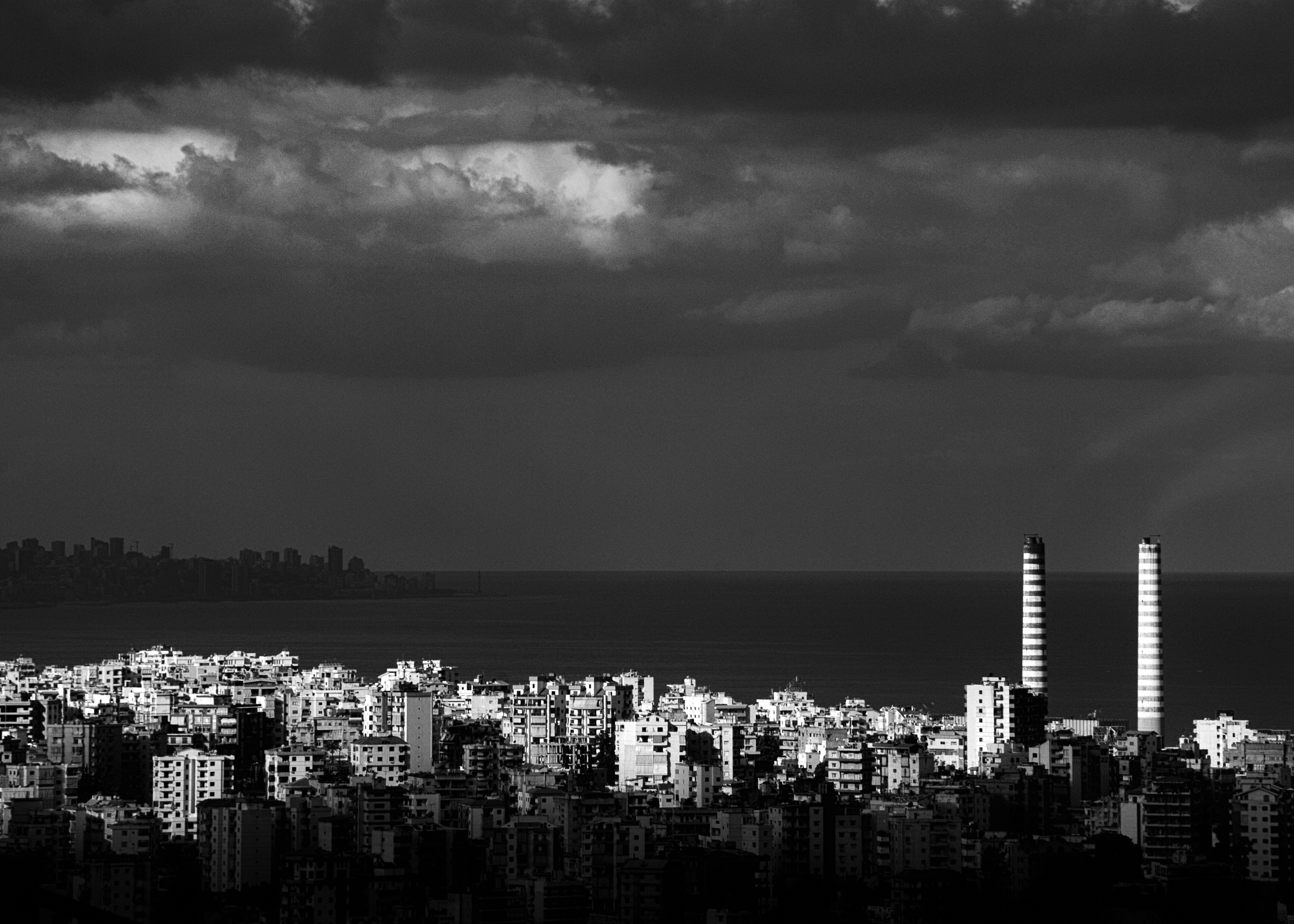
The twin smokestacks of the Zouk Power Plant rise ominously over Zouk Mikael, casting a long shadow over the city and earning the plant its grim nickname as Lebanon’s “power plant of death.” Its history dates back to 1956, when plans were first drawn up to construct a power station capable of meeting the rising electricity demands of Lebanon’s rapidly urbanizing population. At the time, the project was considered a modern industrial milestone, aimed at powering the Beirut suburbs and surrounding areas.
The Birth of an Industrial Ambition (1956)
In the mid-1950s, Lebanon was undergoing significant economic and urban expansion. To support this growth, the government sought to bolster its electricity infrastructure by constructing new power plants. Zouk Mikael, a coastal town located near Beirut, was chosen as the site for a thermal power station due to its access to seawater for cooling and its proximity to Beirut. However, the project faced delays and changes in design, partly due to political instability during the late 1950s.
Construction officially began in the early 1960s, but limited progress was made due to funding shortages and inconsistent government priorities. The initial design envisioned a state-of-the-art plant that could use both natural gas and oil to reduce emissions, but by the time construction resumed in the late 1970s, these ambitions had been downgraded.
Completion Amid Civil War (1983)
After nearly three decades of delays, the Zouk Power Plant was finally completed in 1983, in the midst of the Lebanese Civil War (1975–1990). The plant, however, was built using outdated technology and relied heavily on heavy fuel oil (HFO), a cheap but highly polluting fuel. Global standards for emissions had evolved, but Lebanon’s war-torn state and economic struggles prevented the implementation of proper environmental safeguards.
The plant’s lack of modern filters and pollution control measures meant that it began emitting high levels of sulfur dioxide (SO₂), nitrogen oxides (NOₓ), andparticulate matter (PM) from the outset, impacting not just the environment but also the health of residents. Its toxic emissions, combined with poor urban planning, set the stage for a decades-long public health disaster.
Urban Expansion and Growing Health Risks
Over the years, as Lebanon’s population grew, residential areas and commercial developments began to surround the plant. Zouk Mikael and its neighbouring towns expanded rapidly, often without consideration for the risks posed by the plant’s emissions. Today, the Zouk Power Plant directly impacts the health of tens of thousands of residents, with studies linking its pollution to rising rates of respiratory diseases, cardiovascular conditions, and cancerin the region. Vulnerable populations, including children and the elderly, are particularly at risk.
The Neglect of Urban Planning
As highlighted by Nadine Bekdache in (Legal Agenda dated 16 Oct. 2018), urban planning efforts have consistently ignored the dangers posed by the Zouk Power Plant. New housing, schools, and commercial projects continue to emerge within close proximity to the plant, exposing more people to its toxic emissions. Despite widespread public outcry and protests, authorities have largely failed to address the plant’s impact, prioritizing short-term development gains over public health and environmental protection.
A Call for Action
Environmental activists and experts have repeatedly called for the modernization or decommissioning of the Zouk Power Plant. Suggestions include transitioning to cleaner energy sources like natural gas, installing modern emission control technologies, or phasing out the plant in Favor of renewable energy projects. However, political gridlock and economic hardships have hindered these reforms.
The Zouk Power Plant, while critical to Lebanon’s energy grid, stands as a stark symbol of neglect and shortsighted planning. Its history, from a hopeful project in 1956 to a health and environmental disaster today, reflects Lebanon’s ongoing struggle to balance development with sustainability. The looming question remains: How much longer can Zouk Mikael endure the shadow of this “death factory”?
 BASSEM H. BOUSTANY Photography
Leave a Reply